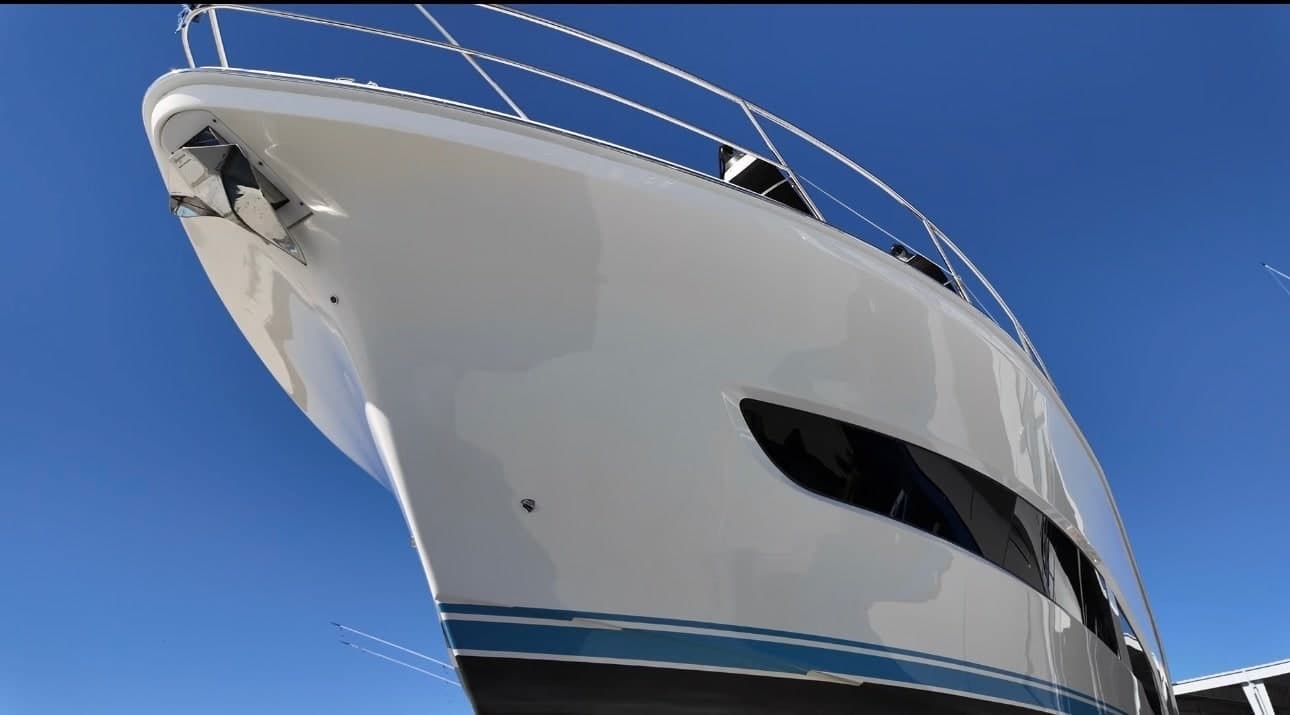
If your boat's finish has gone from glossy to chalky and flat, that's not dirt: it's oxidized gelcoat, and no amount of washing will bring it back. Gelcoat restoration is the process that does. It's also one of the most misunderstood services in marine detailing, partly because most shops bundle it into "polishing" without explaining what's actually happening to your hull.
Here's the straight version: what gelcoat is, why South Florida ages it faster than almost anywhere, and what real restoration looks like.
What Gelcoat Actually Is (And Why It Fades)
Gelcoat is the hard, pigmented outer layer of a fiberglass boat: the shiny surface you see, sitting on top of the structural fiberglass underneath. It's tough, but it's not permanent. Under constant UV, the surface layer breaks down: the resin chalks, the color flattens, and the gloss dies. That chalky, faded look is oxidation, and it's the gelcoat sacrificing its outer skin to protect what's below.
In South Florida, this happens fast. The sun is intense and year-round, and most boats sit out in it. Salt and heat accelerate the breakdown. A hull that might oxidize slowly in a northern climate can dull noticeably here in a single season of neglect.
Restoration vs. a Wash and Wax: Knowing the Difference
This is where owners get oversold or undersold, so it's worth being precise.
- A wash removes dirt, salt, and grime. It does nothing for oxidation.
- A wax or sealant adds a protective, glossy layer on top of healthy gelcoat. On already-oxidized gelcoat, it just puts a shine over a damaged surface, and it won't last.
- Restoration actually removes the oxidized layer to expose fresh, glossy gelcoat underneath, then protects it.
If your gelcoat is only lightly dulled, a polish and protection might be enough. If it's chalky and faded, you need restoration. Waxing over heavy oxidation is the most common mistake we're called to fix.
The Signs Your Gelcoat Needs Restoration

You don't need a meter to know. Look for:
- A chalky residue that rubs off white (or your hull color) on your hand.
- Flat, faded color: dark hulls go grey, colors look washed out.
- No more water beading: water sheets and clings instead of rolling off.
- A rough, dry feel instead of slick and smooth.
One or more of those means the surface is oxidized and washing won't fix it.
How Professional Gelcoat Restoration Works

Done right, it's a staged process. Skipping stages is how hulls get burned.
Assessment and Wash
Every job starts with a clean, dry hull and a real look at how deep the oxidation goes. Light oxidation needs far less aggressive work than heavy chalking, and matching the process to the condition is what protects the gelcoat. Gelcoat is only so thick: once it's gone, you're into paint or a re-gel, which is a different and far more expensive job.
Compounding
A cutting compound and machine pad remove the dead, oxidized top layer. This is the step that does the heavy lifting, cutting through the chalk to reach the bright gelcoat underneath. On badly oxidized hulls this may start with a heavier cut (and occasionally wet sanding) before stepping down to finer compounds. The skill is removing exactly enough and no more.
Polishing
Compounding leaves a clear but slightly hazy surface. Polishing refines it, removing the fine haze and the machine marks from the previous step and bringing the gloss back to full depth. This is the difference between "shiny from across the dock" and "shiny up close."
Sealing or Coating to Lock It In
Freshly restored gelcoat is vulnerable: it's bare, with no protection. Left alone in the South Florida sun, it will start oxidizing again. So the final step is protection: a sealant, or for the longest-lasting result, a marine ceramic coating. Skipping this is like sanding a deck and leaving it bare; you've done the hard part and then let it undo itself.
Gelcoat vs. Painted Hulls: Does It Change the Process?
It does. Most older boats are gelcoat, but in the last several years a lot of new hulls come painted. Paint is thinner and less forgiving than gelcoat: it can't take the same aggressive cutting, and burning through it is a real risk. We identify which we're working with before touching the hull and adjust the process and products accordingly. The two are not interchangeable, and anyone treating them the same is gambling with your finish.
How Long Does Restored Gelcoat Stay Glossy in South Florida?
Honestly, it depends entirely on what happens after the restoration. Bare restored gelcoat, left unprotected and sitting in the sun, can begin dulling again within months here. That's just the reality of this climate. Protected with a quality sealant and maintained, it holds far longer. Protected with a marine ceramic coating and washed properly, longer still. The restoration brings the gloss back; protection and maintenance are what keep it.
Can You Restore Gelcoat Yourself?
Light oxidation, a small boat, patience, and a willingness to learn: yes, a careful owner can hand-polish their way to a real improvement. Where it goes wrong is heavy oxidation that needs machine compounding. Too aggressive a pad or compound, too much pressure, or lingering in one spot, and you cut straight through the gelcoat. That's not a buff-out fix; that's a refinishing bill. If your hull is badly chalked, the honest advice is to either go slow and conservative, or hand it to someone who does this every week.
Frequently Asked Questions
Is gelcoat restoration the same as polishing?
Polishing is one step within restoration, not the whole thing. Restoration removes the oxidized layer (compounding), then refines and protects it. Polishing alone, on heavily oxidized gelcoat, won't get you there.
Can badly oxidized gelcoat be saved, or does it need painting?
Most oxidized gelcoat can be restored, even when it looks far gone: that's the good news, because restoration is much cheaper than painting. The exception is gelcoat that's already been compounded thin over the years or has cracked and crazed. We assess thickness and condition before committing to a process.
How often should gelcoat be restored?
If it's protected and maintained, restoration is a periodic reset, not a routine. The better your protection and wash habits, the longer between full restorations. Unprotected boats in South Florida need it far more often.
Does ceramic coating help gelcoat last longer?
Yes, significantly. A marine ceramic coating shields restored gelcoat from the UV and salt that caused the oxidation in the first place. We cover how long those coatings realistically last here.
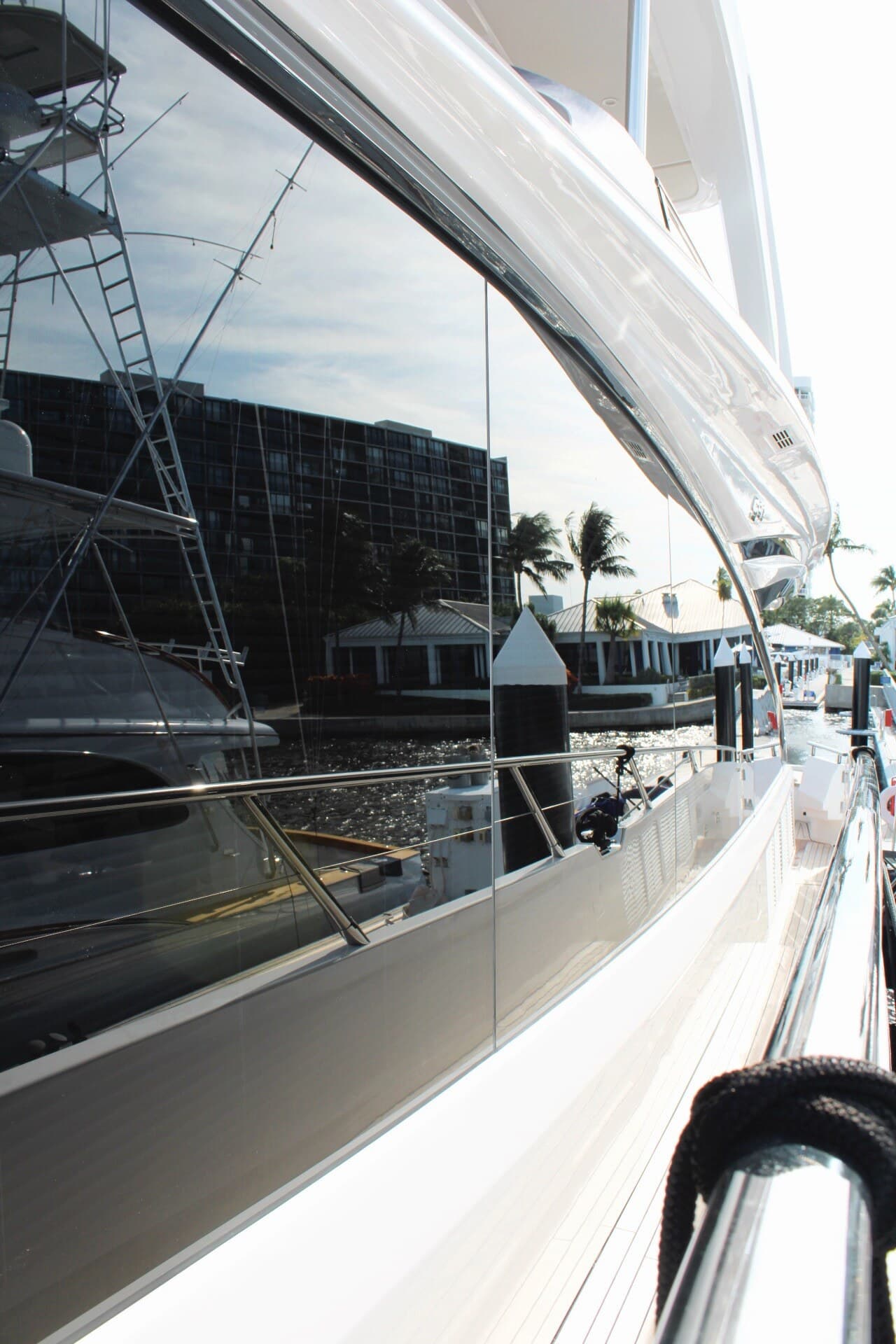
Restored gelcoat is one of the most dramatic before-and-afters in marine detailing: a hull that looked finished can come back to a deep, wet gloss. The work is in doing it without thinning or burning the surface, and in protecting it so South Florida's sun doesn't undo it. If your hull has gone chalky, our gelcoat restoration service covers the full oxidation-removal process. Get a quote and we'll assess what it needs.