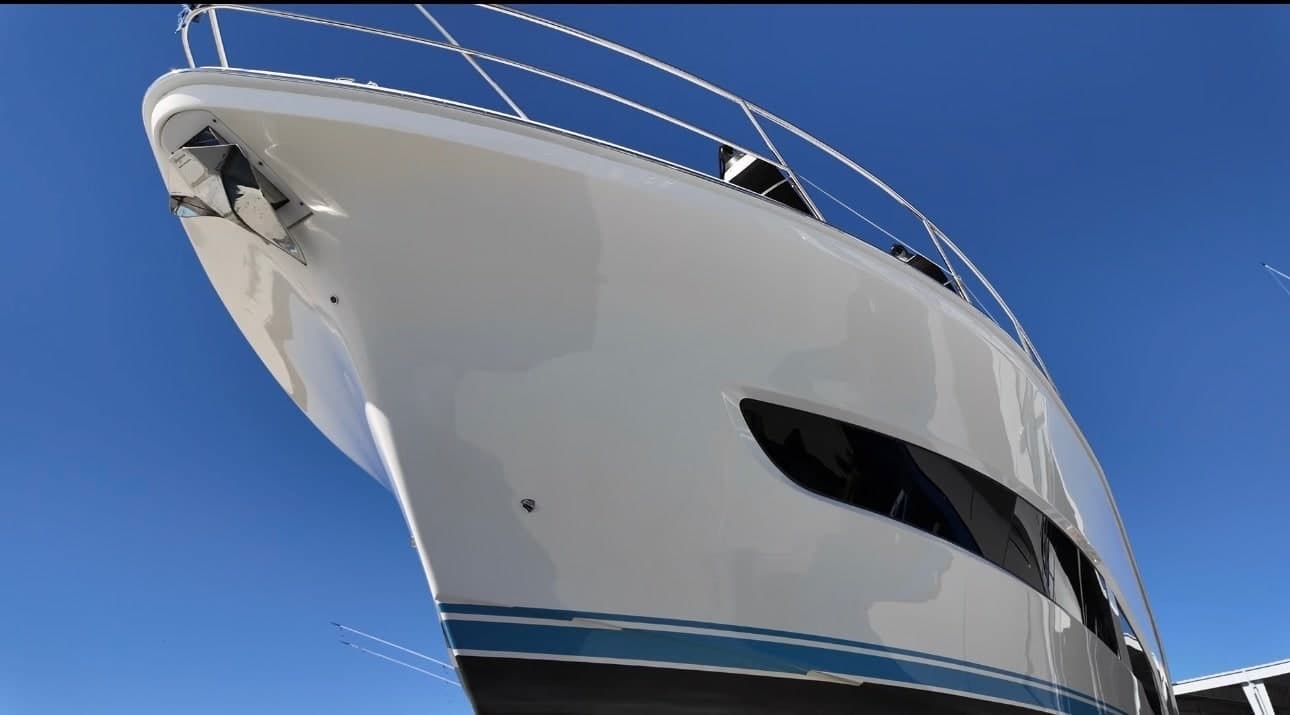
If your boat lives in South Florida waters (or spends any meaningful time there), you already know what saltwater does to things. It corrodes hardware, degrades upholstery, and works constantly against every surface on your vessel. The gelcoat or paint on your hull is no exception.
Ceramic coating has become one of the most discussed protective options in marine detailing over the past few years. The claims are bold: some installers promise years of protection, near-zero maintenance, and a finish that repels everything saltwater throws at it. The reality is more nuanced than that, and anyone giving you a completely uncomplicated sales pitch probably isn't being straight with you.
This article breaks down what ceramic coating actually does on a boat, how saltwater and the South Florida environment specifically affect unprotected surfaces, and whether the investment makes sense for the type of boating you do. The goal isn't to sell you on the service. It's to give you enough information to make a good decision.
What Ceramic Coating Actually Does on a Boat
Ceramic coating is a liquid polymer that bonds chemically to the surface it's applied to (gelcoat, paint, metal, glass, or vinyl) and cures into a hard, semi-permanent protective layer. Unlike wax, which sits on top of the surface and breaks down within weeks, a ceramic coating becomes part of the surface. It doesn't wash off, wipe off, or degrade quickly from sun exposure.
On a boat, the coating works the same way it does on a car, but the environment it's protecting against is considerably more aggressive. The primary functions are:
Hydrophobicity. A properly applied ceramic coating causes water to bead and sheet off the surface rather than sitting on it. On a boat, this means saltwater, spray, and rain don't have time to dry and leave deposits: they run off. This is the coating's most immediately visible effect.
UV and oxidation resistance. The coating acts as a sacrificial barrier between the sun and your gelcoat or paint. UV radiation is one of the primary causes of oxidation and fading on boat surfaces. The coating absorbs and deflects it before it reaches the substrate.
Chemical and contaminant resistance. Saltwater, exhaust residue, bird droppings, scum lines, and algae all interact with boat surfaces constantly. A ceramic coating significantly reduces how much of that contamination bonds to the surface, making it easier to clean and slower to degrade.
Gloss retention. Ceramic-coated surfaces maintain their finish longer than uncoated ones. For gelcoat especially, which oxidizes and dulls readily in marine environments, this is one of the most practical long-term benefits.
What ceramic coating doesn't do: it doesn't prevent all scratching, it doesn't stop biological fouling below the waterline, and it doesn't last forever. Understanding those limits is as important as understanding the benefits.
How Saltwater and the South Florida Environment Attack Unprotected Surfaces
South Florida is one of the most demanding marine environments in the world for vessel maintenance. The combination of factors here accelerates surface degradation faster than most other coastal regions. Understanding why helps explain what ceramic coating is actually protecting against.
Salt Deposits and Oxidation
Saltwater is corrosive by nature, but the more damaging process for above-waterline surfaces is what happens when saltwater dries. When salt spray or splash lands on gelcoat or paint and evaporates in the heat, it leaves behind concentrated mineral deposits. Those deposits are abrasive, pull moisture from the surrounding surface, and over time contribute directly to oxidation: the breakdown of the clear protective layer in gelcoat or paint.
In South Florida, this cycle happens daily. Boats that aren't rinsed consistently after every outing accumulate salt deposits quickly, and those deposits work into the surface texture, making the boat harder to clean and accelerating the dullness that comes with oxidation. A ceramic coating creates a barrier that prevents salt from bonding directly to the substrate: deposits sit on the coating instead, where they rinse off far more easily.
UV and Heat Exposure
Florida averages more than 230 days of sunshine per year, and the UV index regularly reaches extreme levels between April and October. For boat surfaces, this means constant high-intensity UV radiation breaking down gelcoat and paint at a molecular level, causing fading, chalking, and the loss of gloss that makes an older boat look tired even when it's otherwise well maintained.
Heat compounds this. Surface temperatures on a dark-hulled boat in direct Florida sun can reach extreme levels, accelerating the chemical reactions that degrade protective surfaces. Boats stored on lifts or in the water without shade take on more UV load in a single South Florida summer than a comparable vessel in a northern climate would in several years.
Ceramic coating's UV resistance directly addresses this. It doesn't block all UV (no surface treatment does), but it significantly slows the rate at which underlying gelcoat or paint absorbs radiation and begins to break down.
Scum Lines, Staining, and Biological Growth
The waterline on a South Florida boat is one of the most punished areas on any vessel. Fuel runoff, algae, mineral deposits from the water itself, and general biological growth accumulate at and just above the waterline constantly, especially in the warm, nutrient-rich intracoastal and marina environments common throughout the region.
These scum lines aren't just cosmetic: the longer organic and chemical deposits sit on gelcoat, the more likely they are to etch into the surface or cause staining that regular washing can't remove. A ceramic-coated waterline area sheds these deposits significantly more readily, reducing how aggressively they bond and how much effort is required to keep the area clean.
Ceramic Coating vs. Wax and Sealant: Why the Comparison Matters at Sea
Most boat owners have used wax at some point. It's familiar, accessible, and produces a noticeable shine. The question worth asking is whether it's doing enough for a vessel that spends regular time in saltwater. The honest answer is that for most serious boaters in this environment, it isn't.
Wax is a sacrificial layer applied to the surface that degrades through UV exposure, washing, and contact with water and contaminants. On a car parked in a garage, a good wax job might last three to four months. On a boat in active South Florida use (sun exposure, saltwater, frequent washing), that timeline shrinks considerably. A boat waxed in March may have minimal protective coverage by June. That's not a knock on wax as a product; it's just the reality of what it's designed to do and how quickly marine conditions consume it.
Paint sealants are a step up: synthetic polymer-based products that bond more firmly to the surface than carnauba wax and last longer, typically four to six months under similar conditions. They're a reasonable choice for boats used occasionally or kept under cover, but they share the same fundamental limitation as wax: they wear away, and in saltwater use they wear away faster than the marketing suggests.
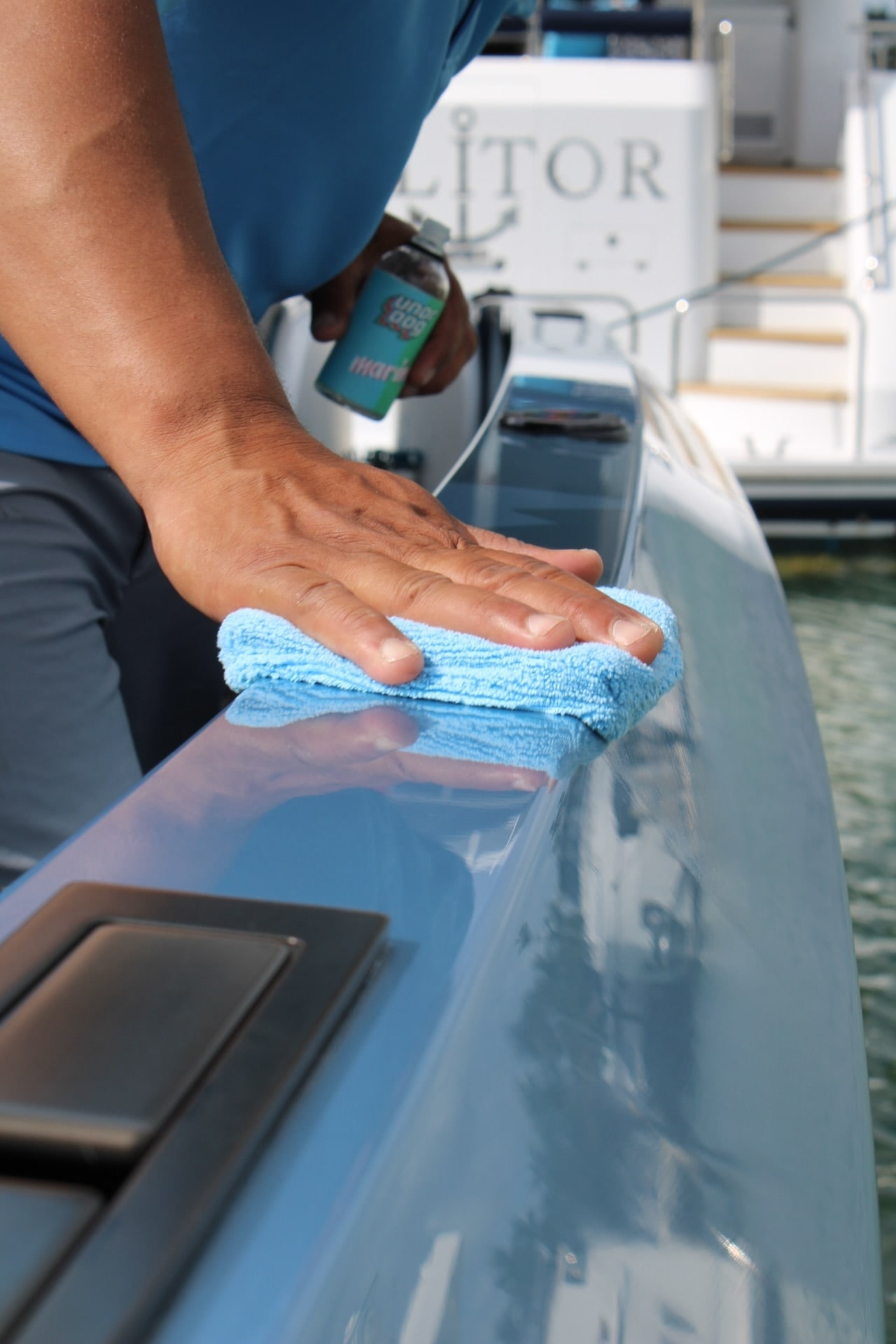
Ceramic coating operates differently. Rather than sitting on top of the surface as a layer that erodes, it bonds chemically to the gelcoat or paint and cures into a semi-permanent barrier. It doesn't wash off in normal use, doesn't degrade quickly from UV exposure, and doesn't require reapplication every season in the way wax and sealant do.
The practical difference in a marine context: a waxed or sealed boat needs regular reapplication and still leaves the underlying surface relatively vulnerable between treatments. A ceramic-coated boat has consistent protection in place regardless of how many times it's been in the water since the last application.
The trade-off is upfront cost and the fact that correction mistakes made during application are harder to reverse, which is why prep and application quality matter so much more with ceramic coating than with wax.
Gelcoat vs. Painted Surfaces: Does It Matter for Coating?
This is a question that comes up regularly with boat owners considering ceramic coating, and most articles skip it entirely. It matters, not because ceramic coating can't be applied to both, but because the prep requirements and long-term behavior differ.
Gelcoat is the factory-applied polyester resin surface found on the vast majority of fiberglass boats built before the last decade, and still common on production boats today. It's not paint: it's a structural surface layer that provides both the color and the outer protective barrier of the hull. Gelcoat is porous compared to automotive paint, which means it absorbs contaminants more readily, oxidizes more visibly, and requires a different approach to correction and preparation before coating.
Ceramic coating bonds well to gelcoat, but the surface has to be properly prepared first. Oxidized, chalky, or contaminated gelcoat will not hold a coating effectively: the coating will bond to the degraded surface layer rather than the healthy substrate beneath it, and the result will be a coating that peels or fails prematurely. Thorough correction and decontamination before application isn't optional on gelcoat; it's what determines whether the coating performs as it should.
Painted boat surfaces, more common on newer production boats and custom builds, behave more similarly to automotive paint. They're generally smoother and less porous than gelcoat, which means they take ceramic coating well and tend to show the gloss benefits more immediately. The same prep requirements apply: the surface needs to be clean, corrected, and chemically stripped of any oils or residues before the coating goes on.
Metal surfaces (aluminum hulls, stainless fittings, rails, and hardware) can also be coated, though the products used and the prep process differ from hull coating. On a vessel with significant stainless or aluminum above the waterline, coating those surfaces alongside the hull provides comprehensive protection against corrosion and salt staining across the whole boat.
The practical takeaway: ceramic coating works on all of these surfaces, but it performs as well as the prep that preceded it. A coating applied to poorly prepared gelcoat will underperform regardless of how good the product is. A coating applied to properly corrected, decontaminated, and clean gelcoat will deliver the full protection and gloss the product is capable of.
The Full Benefits of Ceramic Coating for Boats
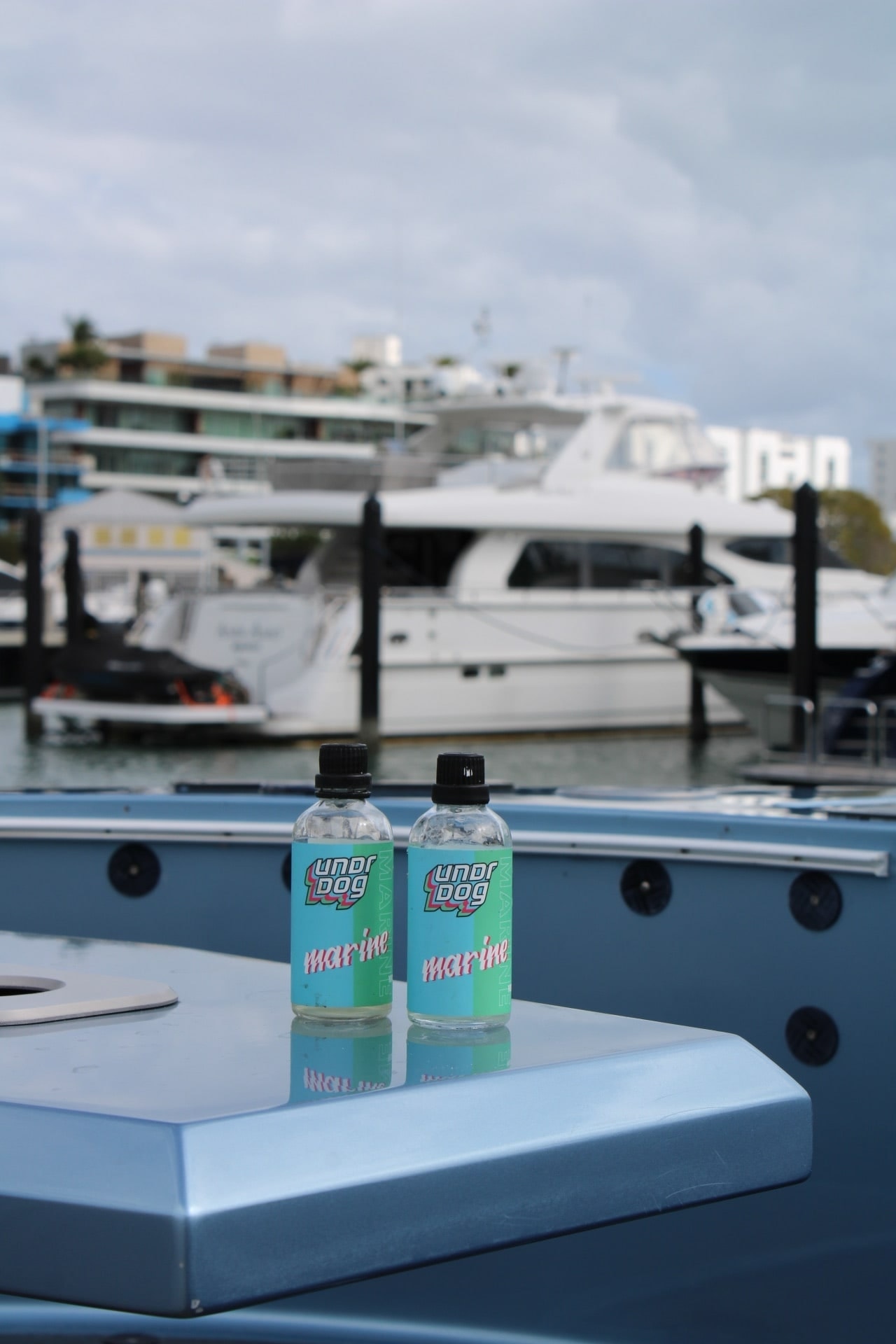
With the environmental context established, here's what ceramic coating specifically delivers on a vessel in active saltwater use, and what each benefit actually means in practice.
Saltwater and Corrosion Resistance
Salt is relentless on boat surfaces. Every splash, every spray, every hour at the dock in saltwater air contributes to the slow degradation of unprotected gelcoat, paint, and metal. Ceramic coating creates a chemically inert barrier between saltwater and the substrate: the salt has nowhere to bond, and instead sits on the surface of the coating where it rinses off with fresh water.
This is particularly valuable for the areas of a vessel that get the most consistent saltwater exposure: the hull sides, bow, and transom on a planing boat; the waterline and topsides on a sailboat or larger yacht. These areas take the most spray and the most contact with the water itself, and they're the first places oxidation and salt staining show up on an uncoated boat.
UV Protection
As covered in the environment section, UV radiation is the primary driver of gelcoat and paint degradation in South Florida. Ceramic coating acts as a UV barrier: not a total block, but a significant reduction in the amount of radiation reaching the substrate. The practical result is slower oxidation, longer gloss retention, and a surface that holds its appearance season after season rather than fading noticeably year over year.
For boats with white or light-colored hulls, which make up the majority of the South Florida fleet, this matters because oxidation on white gelcoat produces that characteristic chalky, flat appearance that's difficult to reverse once it's progressed. Coating the hull before oxidation sets in is significantly easier and less expensive than correcting it afterward.
Hydrophobicity and Self-Cleaning Effect
The water-beading properties of a ceramic coating aren't just satisfying to look at: they have functional value on a boat. When water sheets off a coated surface rather than sitting on it, saltwater deposits, mineral spots, and organic contamination have less time to bond. After a day on the water, a rinse with fresh water does considerably more work on a coated hull than on an uncoated one.
This self-cleaning effect reduces the frequency and intensity of washing required to keep the boat looking clean. It also means that between professional maintenance washes, the boat accumulates less surface contamination, which in turn means the coating lasts longer and the substrate underneath stays in better condition.
Oxidation Barrier
Oxidation is the most common reason boats end up needing significant gelcoat correction. Left unchecked, it progresses from surface dullness to deep chalking that requires aggressive compounding to address. In severe cases, it progresses to the point where the gelcoat itself is structurally compromised.
Ceramic coating dramatically slows this process by shielding the gelcoat from the UV radiation and atmospheric oxygen that drive oxidation. A coated hull maintained with regular rinses will stay in substantially better condition over a five-year period than an identical uncoated hull given the same amount of use. This has direct implications for maintenance costs, resale value, and the eventual scope of restoration work the boat will need.
Easier Maintenance
This benefit tends to get listed last but it's often what matters most to working boat owners. A ceramic-coated vessel is significantly easier to maintain between professional details. Salt, scum, bird droppings, and exhaust residue don't bond to the surface the way they do on uncoated gelcoat: they sit on top of the coating and release with far less effort.
For captains and owners who want their boat to look presentable between details without spending hours washing and waxing, this is one of the most tangible day-to-day benefits of coating. The time savings compound over a boating season, and the boat arrives at each detail appointment in better base condition, which keeps professional maintenance costs lower over time.
What Has to Happen Before the Coating Goes On
This is the section most competitors skip, and it's the most important one for understanding why ceramic coating results vary so dramatically between installers.
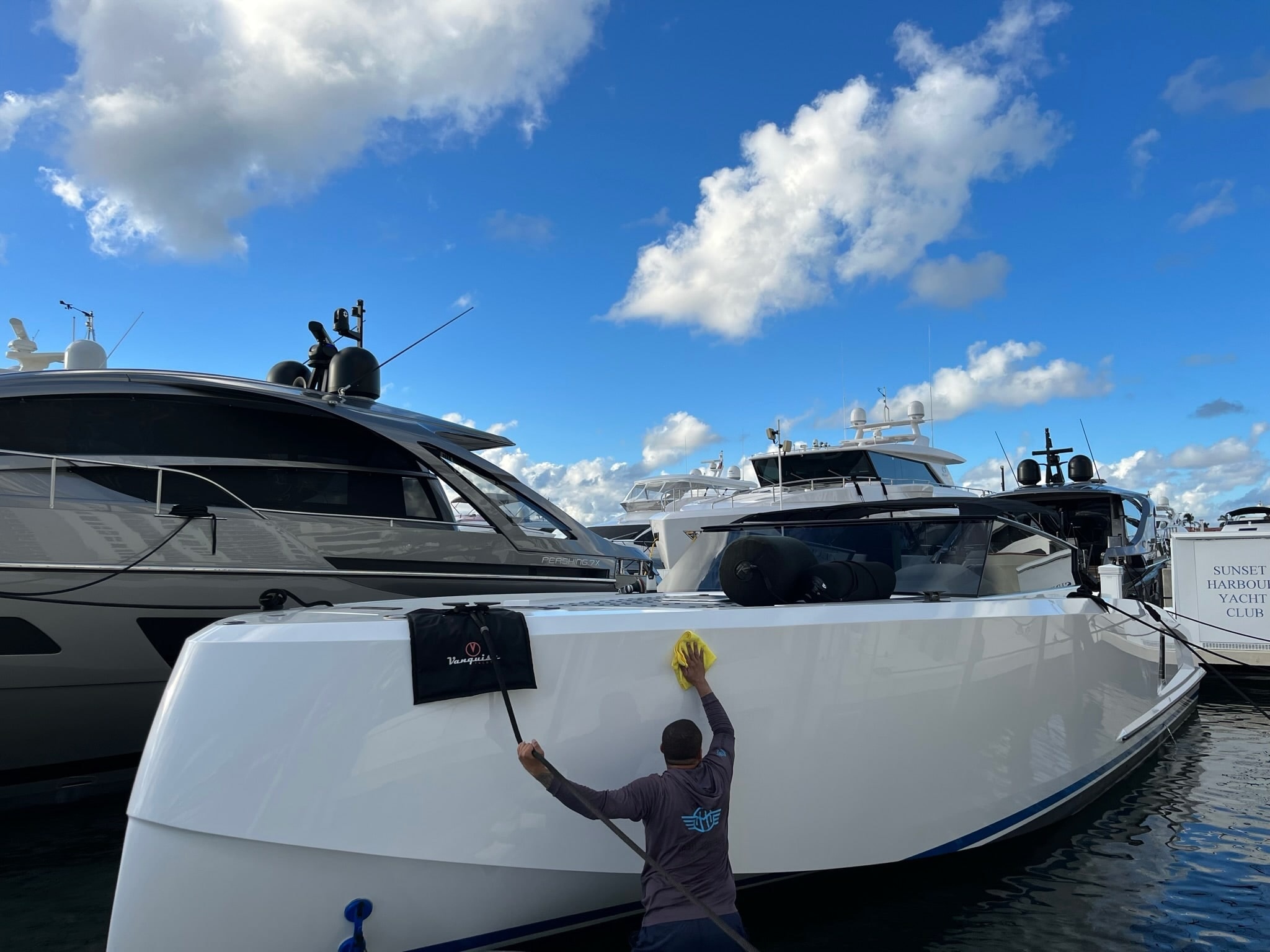
The coating itself (the product in the bottle) is largely the same across reputable professional-grade brands. What separates a coating job that looks exceptional and lasts as long as it should from one that fails or underperforms within months is almost entirely what happened to the surface before the coating was applied. Prep is where the work is, and it's where corners get cut.
Wash and decontamination comes first. The vessel needs a thorough wash to remove loose salt, grime, and surface debris: not a quick rinse, but a proper hand wash of every panel being coated. This is followed by chemical decontamination: an iron remover to dissolve embedded metallic particles, and where appropriate a dedicated marine decontamination product to address the specific contaminants boats accumulate: fuel film, mineral deposits, algae residue, and waterline buildup. On gelcoat that's been in active saltwater use, this step takes time to do correctly.
Surface inspection follows decontamination. Under proper lighting, the gelcoat or paint is assessed for oxidation, scratches, water spot etching, scum line staining, and any other defects that need to be addressed before coating. On boats with significant oxidation or surface damage, paint thickness readings help determine how aggressively the surface can be corrected without compromising the gelcoat itself.
Gelcoat or paint correction is performed wherever the surface needs it. Any oxidation, swirl marks, or etching present on the gelcoat will be locked in place by the coating if not removed first: the coating seals the surface, defects and all. Light to moderate oxidation requires compounding followed by polishing to restore clarity and gloss. More significant oxidation may require wet sanding before polishing.
This correction step is what most budget coating jobs skip entirely or rush through. Skipping it produces a coating that looks acceptable for a few weeks (the fresh product has its own temporary gloss) but reveals the underlying surface condition as soon as that initial shine fades.
IPA wipe-down is the final step before coating application. Every panel is wiped down with an isopropyl alcohol solution to remove all remaining polish oils, waxes, and surface residues. This strips the surface completely bare, which is necessary for the ceramic coating to bond correctly. Any oil or residue left on the surface creates weak points in the coating's adhesion: areas that may separate or fail under the stresses of regular marine use.
The point worth emphasizing: a ceramic coating is only as good as the surface it's applied to and the care taken in applying it. If you're considering coating your boat, the first question to ask any installer isn't about the brand of coating they use. It's about their prep process and how long they spend on it.
How Long Does Boat Ceramic Coating Last?
This is where honest answers matter most, and where a lot of the coating industry oversells.
Most ceramic coating manufacturers list longevity figures of two to five years. Those numbers are based on controlled conditions and automotive applications. On a boat in active saltwater use, particularly in a high-UV, high-heat environment like South Florida, real-world performance is shorter.
A properly applied professional-grade ceramic coating on a well-prepared boat surface in this environment will typically perform well for somewhere between nine months and two years, depending on several factors: how often the boat is used, whether it's stored in the water or on a lift, how much direct sun exposure it gets, and how consistently it's maintained with appropriate wash products.
Nine months is the honest baseline for a boat in regular saltwater use without covered storage. That's not a failure: that's the coating doing its job under genuinely demanding conditions, degrading gradually rather than all at once, and still providing meaningful protection throughout. A boat that's kept on a lift, rinsed consistently after every outing, and washed with coating-safe products can realistically see eighteen months to two years of solid performance before a reapplication is warranted.
What degrades a coating faster in a marine environment:
- Continuous submersion or dockside storage in saltwater without regular rinsing
- Parking or storage in direct sun without any shade or cover
- Washing with harsh detergents or abrasive products that strip the coating
- Infrequent rinsing that allows salt and organic deposits to sit on the surface
What extends coating life:
- Lift storage that keeps the hull out of the water when not in use
- Rinsing with fresh water after every outing
- Monthly maintenance washes with a pH-neutral, coating-safe soap
- Avoiding automated washes with brushes or harsh chemical treatments
A detailer who quotes you five-year marine coating longevity without qualifications is telling you what you want to hear, not what the conditions here actually produce.
Is Boat Ceramic Coating Worth the Cost?
For most boat owners in South Florida who use their vessel regularly, yes. But the answer depends on what you're comparing it to and how you're thinking about the cost.
If you're comparing it to wax and sealant, the economics shift significantly when you factor in the full picture. Waxing a boat properly (a 30-foot center console, for example) takes several hours of labor and needs to be repeated two to three times per year to maintain any meaningful protection in this climate. Over two years, you've spent significant time or money on repeated applications, and the surface has still spent periods between applications with minimal protection. A ceramic coating applied once covers that same two-year window with better protection throughout, and requires only maintenance washing to stay effective.
If you're protecting a serious investment, the calculus is straightforward. Boats in the $100,000+ range (and in South Florida, that's a significant portion of the boats on the water) depreciate faster when surfaces are poorly maintained. Oxidized gelcoat, stained hulls, and neglected topsides signal maintenance neglect to any prospective buyer or surveyor. Ceramic coating, paired with consistent maintenance, keeps the vessel presenting well and the gelcoat in a condition that doesn't require expensive restoration work before sale.
If you're focused purely on maintenance time, ceramic coating pays for itself in reduced effort. Compare a coated hull that rinses clean after a day on the water with an uncoated hull that requires scrubbing to remove salt film and scum line buildup: the difference compounds across a full boating season.
The honest downside: ceramic coating is not cheap when done correctly. The prep work alone (decontamination, correction, and surface preparation) represents significant labor before a drop of coating product is applied. Anyone quoting a very low price for a full ceramic coating on a boat is either skipping the prep, using a consumer-grade product, or both.
For a boat that sees regular saltwater use in this environment, is worth protecting, and has an owner who wants to spend less time fighting surface degradation and more time on the water, ceramic coating is worth the investment.
Frequently Asked Questions
Does ceramic coating protect against saltwater?
Yes, meaningfully so. Ceramic coating creates a chemically inert barrier between saltwater and the underlying gelcoat or paint, preventing salt from bonding directly to the surface. Instead of etching into the substrate and contributing to oxidation, salt deposits sit on top of the coating and rinse off far more easily with fresh water.
What ceramic coating doesn't do is make a boat completely impervious to saltwater. No surface treatment achieves that. What it does is significantly slow the rate at which saltwater degrades gelcoat and paint, reducing oxidation, preventing mineral etching, and making post-outing cleanup considerably easier.
How much does it cost to ceramic coat a boat?
Pricing depends on the size of the vessel, the current condition of the gelcoat or paint, and the scope of surface preparation required before the coating is applied. A smaller center console or bowrider in reasonable condition will cost less than a large sportfish or yacht with significant oxidation that needs extensive correction first.
The most accurate way to get a number is an in-person assessment. Surface condition varies too much between boats for an honest quote to be given without seeing the vessel. Be cautious of very low flat-rate quotes: they typically indicate prep work is being skipped, which directly compromises how well the coating performs and how long it lasts.
Can ceramic coating be applied to all boat surfaces?
Yes, with the right products and prep for each surface type. Professional-grade ceramic coatings are formulated to bond to gelcoat, marine paint, metal, glass, vinyl, and plastic surfaces, covering essentially every above-waterline surface on a typical vessel.
One important boundary: ceramic coating is not applied below the waterline. Submerged surfaces require antifouling bottom paint to manage biological growth, and ceramic coating is not designed for or compatible with that application.
Does ceramic coating work on gelcoat?
Yes, and gelcoat is actually one of the most common surfaces ceramic coating is applied to in a marine context, since the majority of fiberglass boats are gelcoat-finished rather than painted.
The key requirement is that the gelcoat needs to be properly prepared before the coating goes on. Any oxidation, staining, or surface degradation present needs to be addressed through correction and decontamination before coating. If it isn't, the coating bonds to the compromised surface layer rather than the healthy substrate beneath, and performance suffers accordingly.
How do I maintain a ceramic-coated boat?
After every outing in saltwater, rinse the coated surfaces with fresh water. This is the single most impactful maintenance habit: it removes salt before it has a chance to dry and deposit on the coating.
For regular washing, use a pH-neutral soap specifically formulated for coated surfaces. Avoid harsh degreasers, abrasive cleaners, or any wash product with wax additives: these either strip the coating or leave residues that diminish its hydrophobic properties over time.
A maintenance detail (professional cleaning and coating inspection) once or twice per season is the recommended approach for boats in regular South Florida use. A boat that's maintained correctly will get significantly more out of its coating than one that's left without any care between detail appointments.
HM Car & Boat Detailing installs marine ceramic coatings throughout South Florida and the Hamptons. We perform the preparation and application at your dock (no haul-out required). Get a quote.