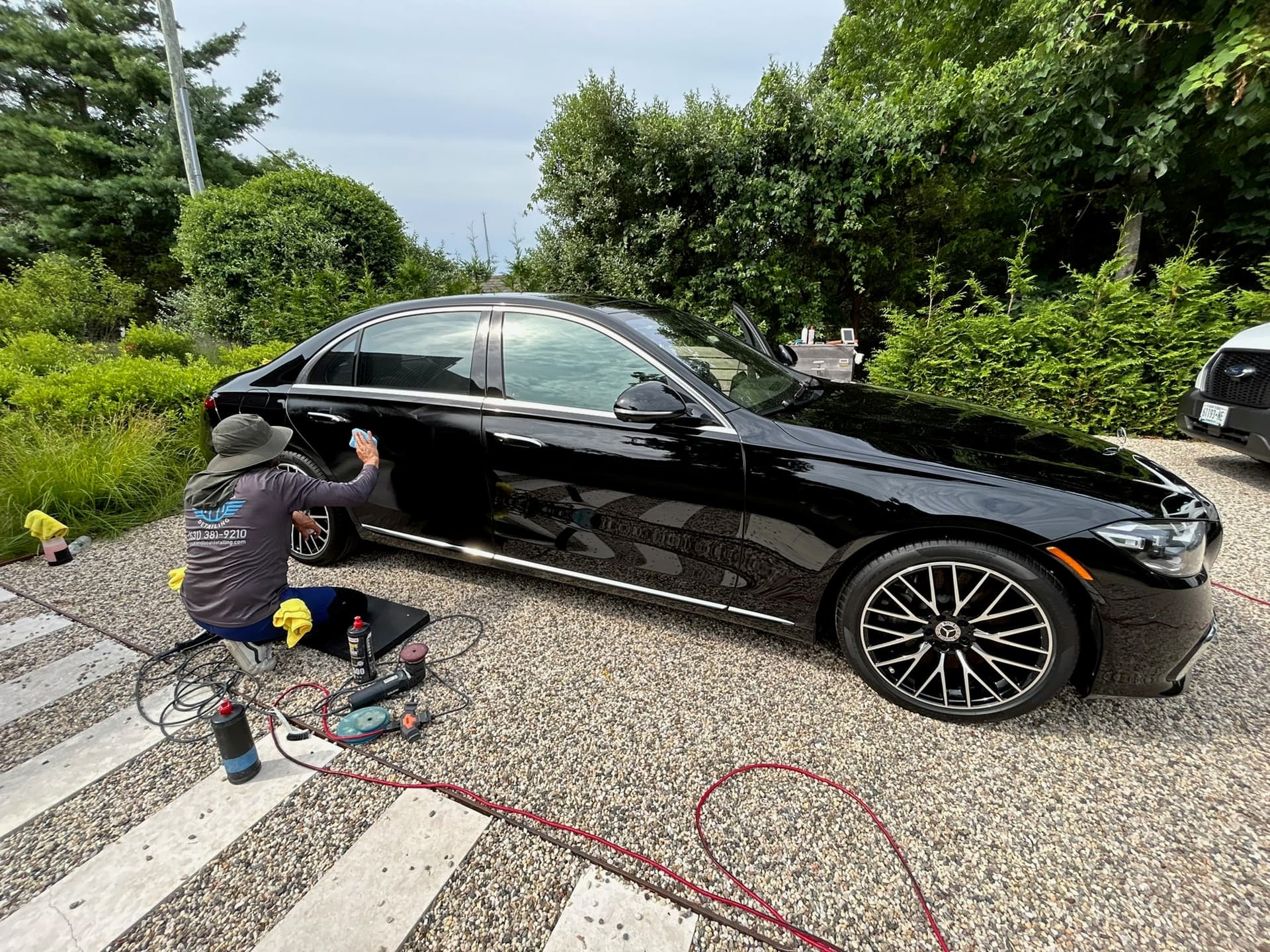
Spending on a ceramic coating and then running the car through a tunnel wash is one of the most common (and most expensive) mistakes we see. The coating doesn't mean the car cleans itself or that washing stops mattering. It means washing matters more, because the wrong wash actively shortens the life of what you paid for. Here's how to care for a coated car so the coating lasts the years it's supposed to.
A Coating Makes Washing Easier, Not Optional
A ceramic coating is slick and hydrophobic, so dirt and water release more easily and the car stays cleaner longer. What it doesn't do is stop contamination from landing. Bird droppings, love bugs, tree sap, pollen, salt air, and hard-water spots still hit the paint: the coating just buys you time to remove them before they etch. Leave them sitting and they'll still mark the surface and degrade the coating over it. Regular, correct washing is how you actually get the coating's full lifespan.
Why Automatic and Tunnel Car Washes Hurt a Coating

This is the part that costs people their coating without them realizing:
- Brushes and cloth strips in tunnel washes drag grit across the paint and inflict swirl marks: the exact micro-scratching a coating is meant to help you avoid.
- Harsh, high-pH chemicals used to blast cars clean fast strip the coating's slickness and shorten its life.
- Spinning brushes are indiscriminate about the dirt they're grinding in.
A coating can take some of this for a while, but every tunnel pass chips away at it. The convenience isn't worth trading years of protection for a faster wash.
How to Wash a Coated Car the Right Way

Nothing exotic, just deliberate:
- Rinse first to flush loose grit before you touch the paint.
- Use a pH-neutral, coating-safe shampoo. Never dish soap: it strips protection. Skip the wax-loaded "wash & wax" products too; they fight the coating.
- Two-bucket method: one bucket of soapy water, one of clean rinse water with a grit guard, so you're not reloading your mitt with the dirt you just removed.
- Wash top-down with a clean microfiber mitt, light pressure.
- Dry properly with a clean microfiber towel or a blower. In Florida heat, letting a car air-dry bakes hard-water spots into the surface, and on a coating those spots are stubborn.
Products: Use vs. Avoid
| Use | Avoid |
|---|---|
| pH-neutral, coating-safe shampoo | Dish soap (strips protection) |
| Dedicated ceramic booster / topper | "Wash & wax" products (fight the coating) |
| Clean microfiber mitt and towels | Sponges, brushes, dirty towels |
| Two buckets with a grit guard | Single-bucket washing |
| Microfiber drying towel or blower | Air-drying in the sun (water spots) |
How Often Should You Wash It?
Every two weeks is a reasonable baseline in South Florida, and sooner whenever something corrosive lands. After heavy pollen, a love-bug stretch, salt air exposure near the coast, or bird droppings, wash promptly rather than waiting for the schedule. The whole point of the coating is that removal is easy when you don't let things sit: use that.
Boosters and Toppers
A coating's water-beading slowly fades before its protection does. A periodic ceramic booster or topper, applied after a wash, refreshes the hydrophobicity and adds a maintenance layer, extending the time before you need a full reapplication. It's the easiest way to keep a coated car performing like new.
When to Bring in a Pro
DIY washing keeps a coating healthy between services, but a periodic professional maintenance wash does what a driveway wash can't: a proper decontamination, a fresh topper, and a trained eye checking the coating for thin or failing spots before they become bare paint. We break that down in Maintenance Wash Programs, and it's the cheapest insurance there is on a coating investment.
Frequently Asked Questions
Can I take a ceramic-coated car through a car wash?
Avoid automatic tunnel washes with brushes: they scratch the paint and strip the coating. Touchless washes are lower-risk, but a proper hand wash is best. The coating is an investment; tunnel washes quietly erode it.
How often should I wash a ceramic-coated car?
About every two weeks in South Florida, and sooner after bird droppings, love bugs, pollen, or salt exposure. Easy, frequent washing is exactly what the coating is designed to enable.
What soap should I use on a coated car?
A pH-neutral, coating-safe car shampoo. Never dish soap, and avoid wax-based "wash & wax" products: both work against the coating.
Why has my coating stopped beading water?
Beading fades before the protection does. It usually means the coating needs a maintenance topper, not a full reapplication. A booster after a wash restores the hydrophobic effect.
A ceramic-coated car rewards the few minutes it takes to wash it right and punishes the shortcut of a tunnel wash. Keep it simple, keep it correct, and the coating lasts. If you'd rather hand the upkeep to someone, our maintenance programs cover it, or get a quote.