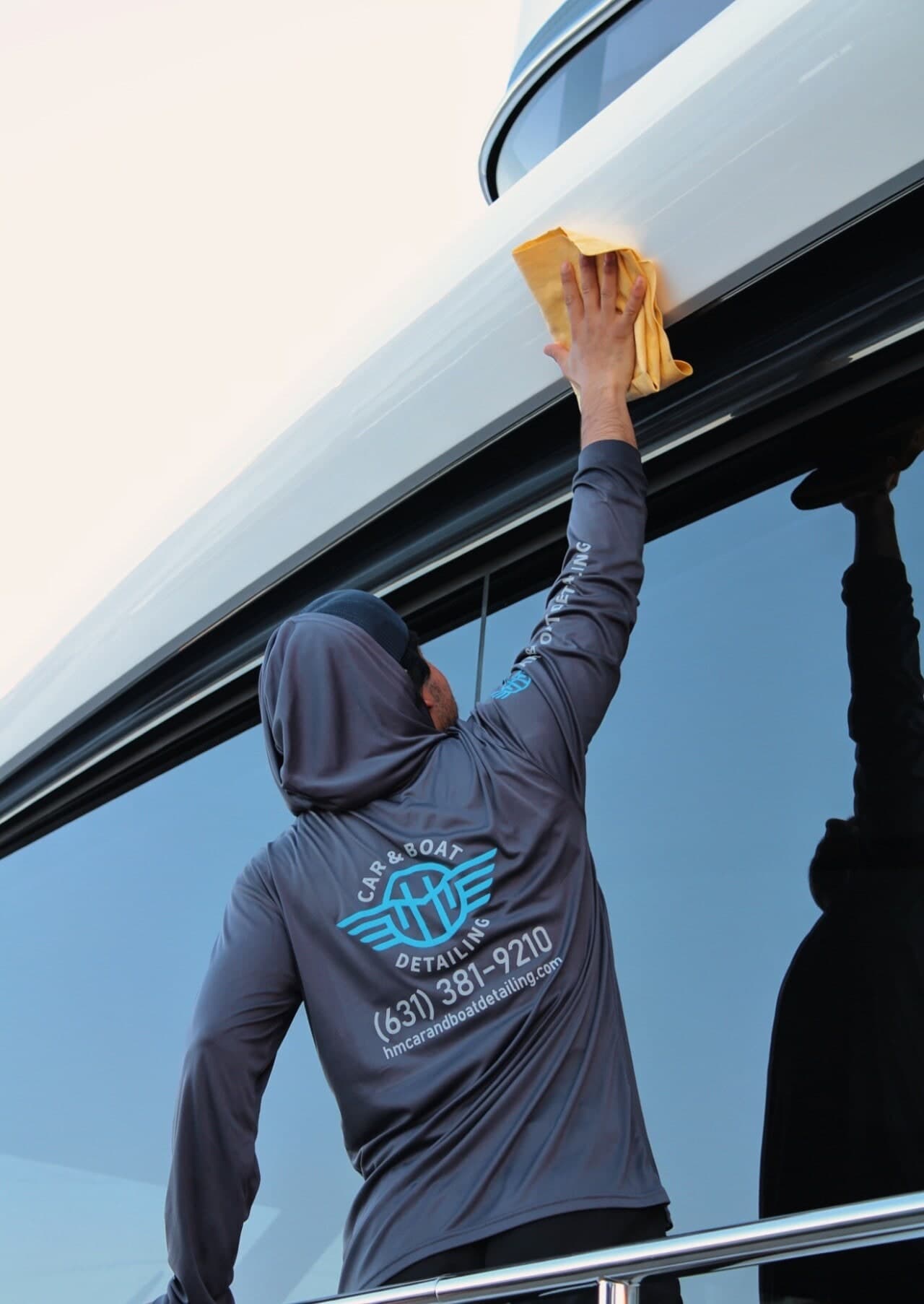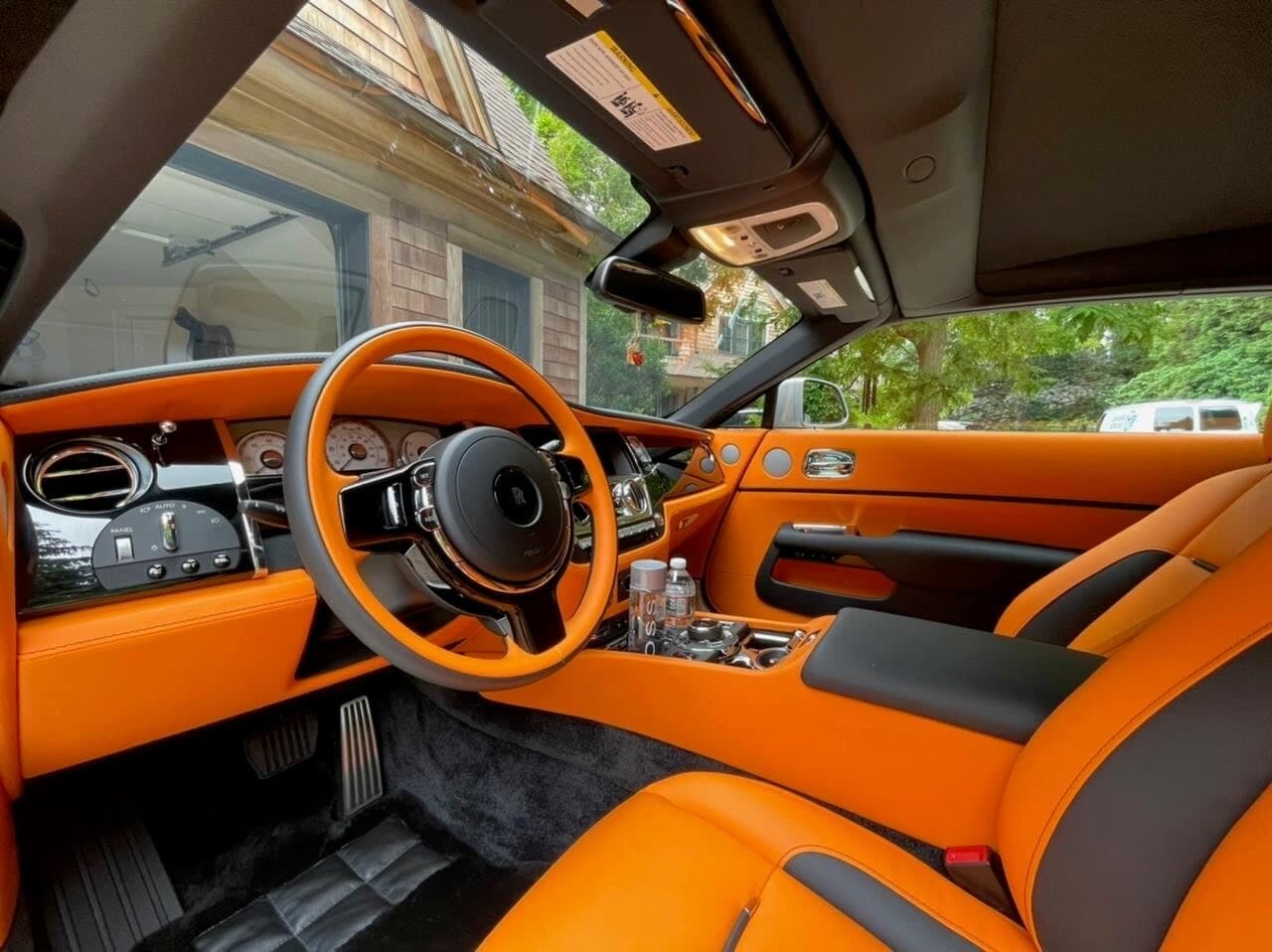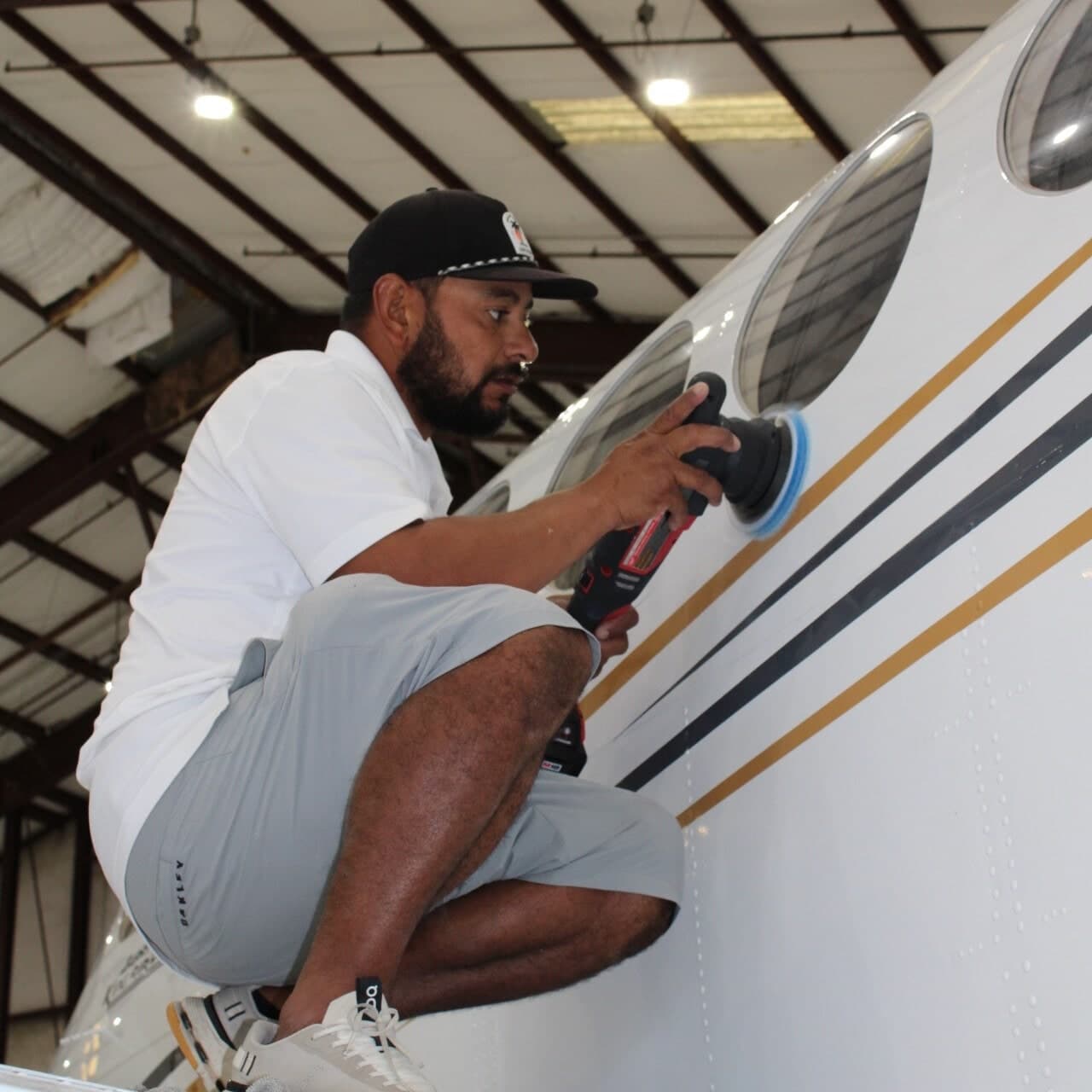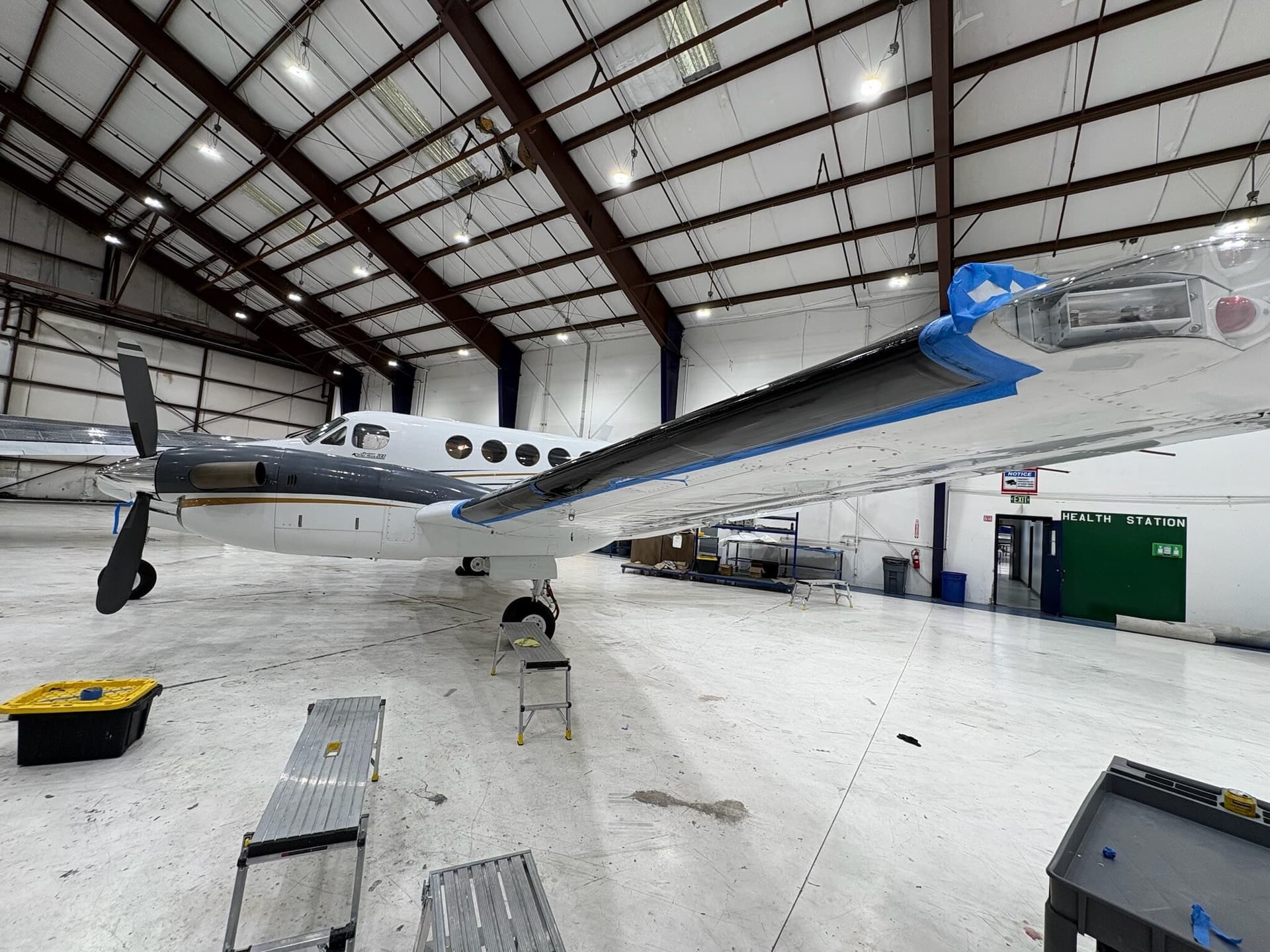
A clean aircraft looks good on the ramp. But for the people who own and fly them, the finish was never the point. The paint, the bare metal, the windows, and the dozens of small components hanging off the airframe are what stand between a flyable aircraft and an expensive corrosion problem. Detailing one correctly has more in common with marine work than with washing a car. In South Florida, that comparison is exact.
We've spent years protecting boats against saltwater in this climate. Aircraft sitting on coastal ramps face the same enemy, often without the same attention. Here's how aircraft detailing actually works, what it protects, and why the chemistry matters far more than the gloss.
Why Aircraft Detailing Is Not the Same as Washing a Car or Boat
A car has one or two surface types and a forgiving margin for error. An aircraft has several, and almost none of them forgive the wrong product.
The same degreaser that strips a wheel arch can soften aircraft paint, embrittle high-strength fasteners, or craze an acrylic windscreen so finely you won't see the damage until it spreads. Cleaning chemicals used on airframes are tested against material specifications (Boeing's D6-17487 and the Airbus equivalent, AIMS 09-00-002) precisely because a product that's harmless on steel can quietly attack aluminum, paint, or plastic over time.
So aircraft detailing isn't a premium car wash. It's a controlled process built around what each surface can tolerate, performed in a way that leaves the airframe cleaner and safer than it was.
How South Florida's Environment Attacks an Unprotected Aircraft

This region is hard on anything with a painted surface. For aircraft, three forces do most of the damage.
Salt Air and Corrosion
This is the one most owners underestimate. You don't need to ditch an aircraft in the ocean for salt to reach it: coastal humidity carries airborne salt that settles on every upper and lower surface, works into seams, lap joints, and fastener heads, and holds moisture against bare and painted metal. That's how filiform corrosion starts under the paint and how galvanic corrosion takes hold around dissimilar metals. It's the same mechanism we fight on boats every week, which is exactly why we take it seriously on aircraft. Regular, correct cleaning is the cheapest corrosion control there is.
UV and Surface Fade
Florida sun oxidizes paint and chalks gelcoat-style finishes faster than almost anywhere else in the country. Clear coats break down, colors flatten, and composite panels lose their sheen. Once oxidation sets in, you're into correction and refinishing, far more expensive than the protection that would have prevented it.
Humidity, Mildew, and Standing Moisture
High humidity keeps surfaces damp long after a rain or a wash, and standing water in low points, control surface gaps, and door seals invites mildew and staining. On interiors (leather, carpet, headliners), the same moisture breeds odor and mold if it isn't managed. Drying is as much a part of the job here as cleaning.
The Surfaces We Work On, and Why Each Needs a Different Approach

An airframe is a collection of very different materials sharing one skin. Treating them the same is how damage happens.
Painted and Bare Aluminum
Painted aluminum needs pH-balanced cleaners that lift contamination without softening the coating. Bare or polished aluminum is its own discipline: it shows every swirl and oxidizes readily, so it's cleaned, brightened, and polished with products and pads chosen specifically for metal, never with whatever was last used on a fiberglass hull.
Composite Panels (Carbon Fiber and Fiberglass)
Radomes, fairings, control surfaces, and increasingly whole sections of modern airframes are composite. They flex and absorb differently than metal and can be marked or dulled by aggressive compounding. They get a gentler hand and different chemistry.
Acrylic Windows and Windscreens
This is where the wrong bottle does the most expensive damage. Aircraft windows are acrylic or polycarbonate, not glass, and they craze (develop a web of fine stress cracks) when exposed to ammonia, harsh solvents, or even the wrong cleaning motion. Crazing is permanent and can compromise the part. We clean windows only with approved plastic cleaners, plenty of lubrication, and clean microfiber, working in straight passes rather than circles. No glass cleaner ever touches them.
Sensitive Components: Static Wicks, Pitot Tubes, and Antennas
Static wicks, pitot-static ports, antennas, sensors, and vents are not styling details. They're flight-critical, fragile, and easily knocked or contaminated. They get masked, avoided, or cleaned by hand with deliberate care, never blasted with a pressure washer or wiped through with a mitt that catches and snaps them.
Why the Chemicals Matter More Than the Shine
The single biggest difference between aircraft detailing and consumer detailing is that the damage from a bad product is usually invisible at first.
A non-approved cleaner can pass every visual test (the aircraft looks spotless) while it's softening paint, beginning corrosion under a seam, embrittling a fastener, or seeding crazing in a windscreen. None of that shows up on the day. It shows up months later, as a maintenance finding or a part that has to be replaced.
That's the whole reason manufacturers test cleaning products against specs like Boeing D6-17487: sandwich corrosion testing, paint-compatibility testing (ASTM F502), hydrogen embrittlement, and acrylic stress-crazing (ASTM F-484). We use products that meet those material standards and follow manufacturer-approved processes. It's the unglamorous part of the job, and it's the part that actually protects the asset.
Dry Wash vs. Wet Wash in the Hangar
Not every aircraft can (or should) get a full water wash. Hangars often restrict water and runoff, electronics and bearings don't love being soaked, and a tied-down aircraft outside has nowhere for the water to go.
For those situations we use waterless and dry-wash systems: products that encapsulate dirt so it lifts away on a microfiber pass without flooding the airframe, leaving a protective film behind. A full wet wash has its place for heavy contamination, but a correct dry wash keeps a hangared aircraft clean between deeper services with far less risk to what's underneath.
What Aircraft Detailing Actually Protects (Beyond Looks)
Corrosion Prevention and Early Detection
Routine cleaning removes the salt and grime that start corrosion. Just as importantly, it's an inspection. Hands and eyes on every panel mean a developing problem, a chip, a seam lifting, gets noticed early, while it's cheap to address.
Drag and Surface Efficiency
A clean, smooth, properly protected surface moves through air better than a dirty, oxidized one. Bug strikes, grime, and a rough finish add drag. It's a small effect per flight, but over a maintenance cycle a consistently clean airframe is a measurably more efficient one.
Resale and Maintenance Value
Aircraft are inspected to the rivet at sale and at every major check. A documented history of correct exterior and interior care (corrosion held off, paint intact, interior preserved) shows directly in resale value and in how an aircraft presents at inspection. Neglect compounds; protection compounds the other way.
Our Process: Inspect First, Touch Last
We work the same way on an aircraft as we do on a yacht: nothing happens until we've looked. We assess the surfaces, note the materials and their condition, identify the sensitive components, and choose the products and method before a single panel is touched. Then we work top to bottom, mask what needs masking, dry thoroughly, and protect. It's deliberate and it's not fast. On an asset like this, that's the entire point.
How Often Should an Aircraft Be Detailed?
Honestly, it depends on where it lives. A hangared aircraft flown occasionally needs less frequent attention than one tied down on a coastal ramp taking salt air every day. As a baseline in South Florida, exterior cleaning every few weeks and a thorough detail and protection cycle a few times a year keeps corrosion off and the finish stable. The closer to the water and the more time outside, the more often. We'd rather set a realistic interval for your situation than sell a calendar that doesn't fit it.
Frequently Asked Questions
Do you use different products on jets than on cars?
Completely different. Aircraft products are tested against manufacturer material specifications so they won't corrode metal, soften paint, or craze windows. A car product that's perfectly safe on a sedan can cause invisible long-term damage to an airframe, so the two never cross over.
Is aircraft detailing safe for the paint and windows?
Yes, when it's done with approved chemistry and the right technique. Paint is cleaned with pH-balanced products that don't strip it, and acrylic windows are cleaned only with plastic-safe cleaners and clean microfiber to avoid crazing. The risk comes from the wrong products, which is exactly what the process is built to avoid.
Can you detail an aircraft inside the hangar?
Yes. We use waterless and dry-wash systems designed for hangar environments where water and runoff are restricted, so the airframe can be cleaned and protected in its bay without flooding it.
How is aircraft ceramic coating different from car ceramic coating?
The principle is the same (a durable hydrophobic layer that resists contamination and UV), but the formulation and application are aviation-specific to stay compatible with airframe materials and to handle the speeds and conditions aircraft surfaces actually see.
How much does aircraft detailing cost?
It varies with the aircraft's size, surface condition, and what the job calls for: there's a real difference between a maintenance clean and full correction and protection. We quote per aircraft after assessing it rather than posting a flat rate that wouldn't mean much. Reach out and we'll give you an honest number.
Aircraft detailing done right is corrosion control, surface protection, and an extra set of trained eyes on the airframe: the shine is just what's left over. If your aircraft lives in South Florida's salt and sun, that protection isn't optional, and it's the same discipline we've brought to this region's boats for years. See our aircraft detailing services or get in touch to talk through your aircraft.